

Life After Selling a Commercial Cleaning Business
Monday morning. The wire hit on Friday. Your phone is quiet, and there are no drivers to dispatch and no 7:30 production meeting. For a California commercial cleaning owner who has run crews for thirty years, that silence is the part nobody prepares you for. Life after selling a commercial cleaning business is not a longer weekend; it is an identity transition, and the founders who handle it well design the transition before they sign.
The scale of what is coming is documented. McKinsey’s Institute for Economic Mobility estimates that about six million US small and medium-sized businesses will face an ownership transition by 2035, up from roughly 4.5 million in the prior decade, and that more than one million of them are viable candidates for sale or employee ownership (McKinsey Institute for Economic Mobility, 2026). Cleaning-industry advisors have been warning owners about the personal side of that handoff for years: your next plan needs to involve more than playing golf every day (CleanLink, 2017).
Key Takeaways
- Life after selling a commercial cleaning business is an identity transition, not a permanent vacation; the founders who do best design the “day after” before the wire clears.
- Work supplies five things beyond income (status, social contacts, time structure, collective purpose, activity), and a sale removes all five at once unless you replace them deliberately.
- A 12-to-24-month step-down, written into the purchase agreement with capped hours and a clear end date, de-risks the shock better than a clean break or an open-ended consulting role.
- Emotional closure needs a plan: a legacy conversation with your supervisors, a public handoff to your property managers and HOA boards, and a first post-exit commitment chosen before the LOI.
- About six million US small and medium-sized businesses will face an ownership transition by 2035, so the question is not whether to plan the next chapter but when (McKinsey Institute for Economic Mobility, 2026).
The Identity Paradox: “Who Am I Without the Midnight Shift?”
The fear that surfaces after a sale is rarely about money. It is about the five things work supplied that a wire transfer cannot replace. Jahoda’s latent deprivation theory, as applied in a University of Edinburgh research project on retiree well-being, holds that work provides status (“an acknowledged social identity”), social contacts, time structure, collective purpose and activity, and that psychological well-being deteriorates when a person does not find substitutes for those benefits (University of Edinburgh, undated). A cleaning owner loses all five on the same Friday: the title on the door, the 6 a.m. huddle with night supervisors, the calendar built around building inspections, the shared purpose of keeping six Class-A buildings spotless, and the physical rhythm of walking floors.
The research on retirement adjustment explains why some owners land on their feet, and others do not.
The cleaning industry also supplies its own distinct triggers, and naming them helps. Commercial cleaning revenue is contract-based, so buyers underwrite recurring square footage and renewal history rather than the previous year’s invoices, and the diligence clock tends to run longer than in owner-operated retail because the buyer is verifying consolidated billing and night-shift staffing across every building. For the seller, that means the window between LOI and close is often the exact stretch when you are still running 6 a.m. huddles while lawyers ask you about crew turnover. The owner who has not planned around that overlap arrives at closing already exhausted, which is the worst state in which to make the decision about what comes next.
Wang and Shi’s review in the Annual Review of Psychology organizes the field around a resource-based dynamic model, in which adjustment depends on the financial, social, personal and health resources a person holds and on whether the resources work supplied get replaced (Wang & Shi, 2014). Read that against a 40-person crew across six Class-A buildings: the owner who sells and keeps his industry board seat, his church committee and his Tuesday breakfast with two property managers has replaced more of the work-supplied resources than the owner whose entire social world was the payroll.
The grief framing is not sentimental; it is diagnostic. Ryan C. Warner, writing in Psychology Today, describes how the business can become the main source of purpose, social connection, daily structure and self-worth until the line between the person and the business feels blurred, and notes that any significant loss of a role or a community can trigger a grief response (Psychology Today, 2026). Warner applies the dual process model of grief, in which you alternate between facing the loss and rebuilding structure, and recommends building identity outside the business before closing rather than after.
That is the practical answer to “who am I without the midnight shift?” You are whoever you have already started becoming.
In our own exit work, the pattern repeats with almost uncomfortable regularity. The owners who call us again a year after closing to describe a good year are rarely the ones who had the best offer. They are the ones who had a second calendar before they signed. The ones who struggle tend to have signed well and planned badly: they treated the sale as a project with a finish line, and discovered that the finish line was the beginning of the hard part.
The owner who spends the eighteen months before a sale rebuilding one non-work anchor at a time- a board seat, a mentorship, a volunteer commitment with a fixed weekly slot- walks into the Monday morning after with a calendar that is not empty. The owner who waits until the wire clears to ask the question is asking it in the worst possible week.
- 🔗 The California Founder’s Guide to Exiting a $2M-$25M Commercial Cleaning & Janitorial Business
De-risking the Shock: The 12-to-24 Month Structured Step-Down
The step-down is the spine of a well-run exit. Instead of choosing between a clean break and an indefinite consulting role, you design a taper with three phases, each with a defined scope, a capped number of hours and an end date written into the agreement. The point is to hand the buyer an independent operation while giving yourself a gradual release from the daily rhythm, not to remain a shadow operator.
We frame that taper with a simple model we call the Four Freedoms, because “step down” describes a schedule but not a goal. Each phase is built to return one specific thing the business took from you: the freedom of time (the midnight calls stop), the freedom of choice (you decide what fills the calendar), the freedom of relationships (you keep the people you actually valued, on your own terms), and the freedom of purpose (the next chapter is yours to name). An exit that only buys the first freedom tends to stall in the passage phase.
| Freedom | What it replaces | When it arrives |
|---|---|---|
| Time | The on-call rhythm and the 6 a.m. meeting | Months 1 to 6, as dispatch and scheduling leave your desk |
| Choice | A calendar set by clients and crews | Months 3 to 9, as you test new commitments on fixed days |
| Relationships | The social world of the payroll | Months 6 to 12, through mentorships and industry seats |
| Purpose | The title on the door | Months 12 to 24, once the next chapter has a name |
Nothing about that model is proprietary research; it is a way of organizing what the psychology literature already says about replacing the latent benefits of work. The value is in the sequencing, because the freedoms do not arrive on their own and they do not arrive at the same time.
| Phase | Timing | What you do | What you stop doing |
|---|---|---|---|
| Operational Bridge | Months 1 to 6 | Introduce the buyer to property managers and HOA boards, walk the buildings, train the night supervisors on client standards | Dispatching crews, approving supply orders, running the 6 a.m. meeting |
| Strategic Mentorship | Months 6 to 12 | Monthly account reviews, pricing input on renewals, introductions to new building contacts | Day-to-day scheduling, hiring and firing, payroll decisions |
| Board Emeritus | Months 12 to 24 | A quarterly call, a reference for the buyer, an occasional client lunch | Any operational authority, any staff reporting line |
The mechanics of that taper belong in the purchase agreement, and the transition services arrangement is where they live. Morgan Lewis describes a TSA as providing a stated term for each service, with extensions of the term usually requiring the agreement of both parties, and fees generally set on a per-service basis, which allows flexibility in terminating or extending the term (Morgan Lewis, 2016). That structure matters for a phased transition plan for business owners: a per-service fee and a stated term mean you can end the parts of the role you no longer want without renegotiating the whole arrangement.
California adds a compliance layer that has to be sequenced before the handoff, and it is the reason the step-down cannot be improvised in the last week of diligence. California WARN requires 60 days’ written notice before a mass layoff, relocation or termination at a covered establishment, to employees and the Employment Development Department (California DIR, current). The threshold is a covered establishment that employs 75 or more employees in the preceding 12 months, with a mass layoff defined as 50 or more employees within a 30-day period (California EDD, current). A sale in which the crew keeps working for the buyer is a different event from a sale followed by a layoff, and the two need different paperwork and different timing.
Pro Tip: Cap the advisory role in hours and define its scope in the agreement itself. A monthly scope check-in and a clear end date keep the consulting role supporting your identity transition instead of trapping you in a half-owner, half-employee limbo.
The janitorial registration duty is the other California item that does not disappear because you sold. Janitorial employers must register with the Labor Commissioner, a requirement in place since July 1, 2018, pay a $500 nonrefundable application fee, renew annually at $500, and provide in-person sexual violence and harassment prevention training once every two years (California DIR, DLSE, current). Whether that registration transfers to a buyer on an asset sale is not answered on the agency’s page, so the founder should confirm the handoff with the buyer and the Labor Commissioner rather than assume it.
Warning: Confirm WARN timing and the janitorial registration handoff with employment counsel before the LOI is signed. The 60-day notice clock and the registration renewal date do not move to accommodate a closing schedule.
The objection that a 12-to-24-month role sounds like you cannot let go gets the framing backwards.
- 🔗 The Operations Manager Bottleneck: How Owner-Dependent Dispatching Kills Janitorial Deals
Where the Step-Down Goes Wrong
A taper is not automatically the right answer, and it is worth being honest about the failure modes. It goes badly when the hours are uncapped, because an open-ended advisory role recreates the job without the title or the equity. It goes badly when the buyer and the seller disagree about who is actually in charge, which is why the agreement should state plainly that the buyer holds operating authority from day one and that the seller does not direct staff. And it goes badly when the seller stays to avoid the identity question rather than to transfer knowledge; a twelve-month role used as a postponement becomes twelve months of limbo, and the crash comes later rather than sooner. A clean break is a defensible choice for some owners, particularly when the buyer has a strong management team, and the seller has already built a full life outside the business. The step-down is a tool, not a virtue.
The objection that a 12-to-24-month role sounds like you cannot let go gets the framing backwards.
A taper with a written end date is the opposite of a leash: it is a schedule for leaving. The owner who says “I’ll stay as long as they need me” has no exit at all; the owner who signs a 12-month consulting agreement at market rates, about 15 hours per week, focused on customer relationships and training, has a date on the calendar and a defined job until then.
Securing Emotional Closure: Honoring the Legacy
Closure is a set of actions, not a feeling that arrives on its own. The psychological sequence of an exit runs through four stages, and the third one is the hard part: after anticipation and the ending, which mixes relief with grief, comes passage, when the old identity has dissolved but a new one has not yet formed (L40°, 2026). The same framework, drawn from the Sudden Money Institute, argues that the first 30 to 90 days after close should go to psychological distance from the deal, stabilizing the financial setup and rebuilding personal structure. A founder who plans a legacy conversation and a public handoff during diligence is building the structure that the passage phase needs.
The legacy question your supervisors will ask is whether the buyer keeps them, and the answer is negotiated, not hoped for. Buyer-funded severance triggers are the mechanism: if the buyer cuts headcount or pay in year one, they owe pre-agreed severance, with WARN and Cal-WARN payments offset to avoid double paying. That clause is what lets you look a night supervisor in the eye and say the protection is in the contract.
The community question is the one that keeps founders up at night in a different way. In a California market where the same county property managers and HOA boards sit across the table for decades, a sale that looks like an abandonment costs more than a sale that looks like a succession. The handoff town hall, where you introduce the buyer to the building contacts you have served for twenty years, is a closure ritual with commercial value: it tells the client the standards survive, and it tells you that your relationships were real enough to be handed on.
The wage environment your legacy sits inside is moving, which is one more reason to close the loop with your people before you go.
Picture the last walk-through. The building is quiet, the lobby floor is still wet from the night crew, and the supervisor who has worked with you for nineteen years is holding a clipboard she will hand to someone else next week. That is the moment the exit stops being a transaction and becomes a handoff. What you say in the next ten minutes will be remembered longer than anything in the purchase agreement.
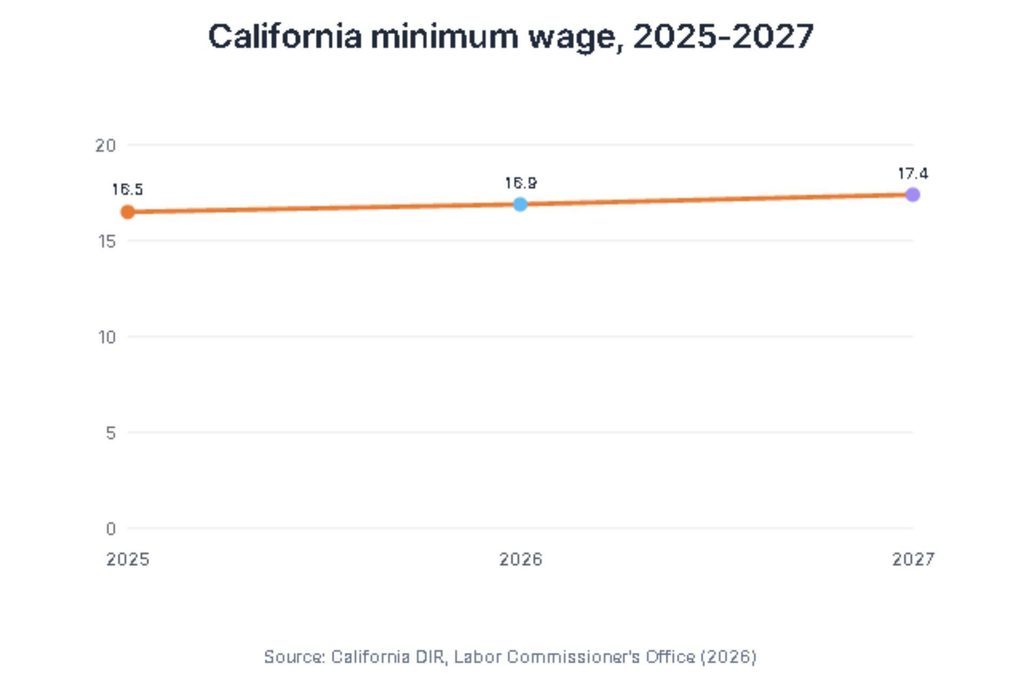
California’s minimum wage rose from $16.50 to $16.90 an hour on January 1, 2026, and the exempt salary threshold rose with it to $70,304 a year (California DIR, 2025). A supervisor who stays with the buyer inherits a wage floor that has moved twice in three years, and a founder who explains that plainly in the final all-hands leaves behind less anxiety than one who slips out quietly.
- 🔗 Protecting Your Cleaning Crews: Ensuring Continuity for Your Labor Force Post-Acquisition
Designing Your “Next Chapter” Before Signing the LOI
The next chapter has to be chosen before the LOI, because after the wire clears you will be making decisions in the passage phase, when judgment is least reliable. The research gives a reason for urgency without alarm: an umbrella review of 15 reviews found the health picture in retirement is mixed, not uniformly bleak, with one 2021 study linking retirement to more depressive symptoms and another 2021 study finding about a 20% lower risk of depression (Greater Good Magazine, 2025). The same review found that people leaving stressful jobs were the most likely to see their mental health improve, which fits an owner who has spent thirty years on call at midnight.

The distinction that matters for a post-exit plan for Boomer founders is whether you are being pushed or pulled. An owner who sells because the midnight calls have worn him down is being pushed away by exhaustion, and the pull toward something has to be built deliberately. The Greater Good review’s finding that retirees with higher socioeconomic status saw mental health improve while those who retired on less money saw declines points to the same conclusion from the other direction: the resources you carry into the exit, financial and social, shape what the exit feels like.
A three-phase design keeps the next chapter concrete and low-infrastructure. Mentor: one or two younger cleaning operators or a trade association committee, with a fixed monthly slot. Invest: a small number of angel or advisory positions in businesses you understand, sized so a loss does not change your life. Give: a family foundation or a local workforce program, with a named commitment rather than a vague intention. The test for each is whether it puts a date on your calendar and a person on the other end of it.
The 18-month pre-LOI checklist is where the design becomes a plan.
Money is the part owners name first and plan last, and it deserves its own page in the pre-LOI work. The practical question is not how much you clear but how the proceeds are sequenced: what portion funds the first two years without touching principal, what portion is set aside for the tax bill and the step-down income gap, and what portion is genuinely investable. On a contract-based cleaning business sold in an asset deal, the allocation between equipment, contracts and goodwill changes how the proceeds are taxed, which is why the deal structure and the tax conversation need to happen together rather than in sequence. Bring your CPA and a tax advisor into the LOI-stage discussion, size any re-investment so a total loss does not change your life, and treat the first year as a stabilization year rather than a growth year. This article is general education, not investment or tax advice; the numbers are yours, and they belong in a plan built with your own professionals.
The 18-month pre-LOI checklist is where the design becomes a plan.
At month 18, write the one-page description of your first post-exit commitment. At month 12, secure the board seat or the mentorship and confirm the time commitment in writing. At month 6, have the legacy conversation with your supervisors and draft the handoff meeting agenda. At month 3, confirm the step-down terms with counsel. At signing, the next chapter already has a first entry on the calendar.
The California wage calendar belongs on that checklist because it affects any contract that runs past this year. The state has already certified $17.40 an hour for January 1, 2027, with the exempt salary threshold rising to $72,384 (California DIR, 2026). A founder who is still consulting into 2027 will be advising the buyer on renewals priced against a higher floor, and a founder who has already left has handed that problem to someone else.
Holistic Stewardship for the Entire Journey
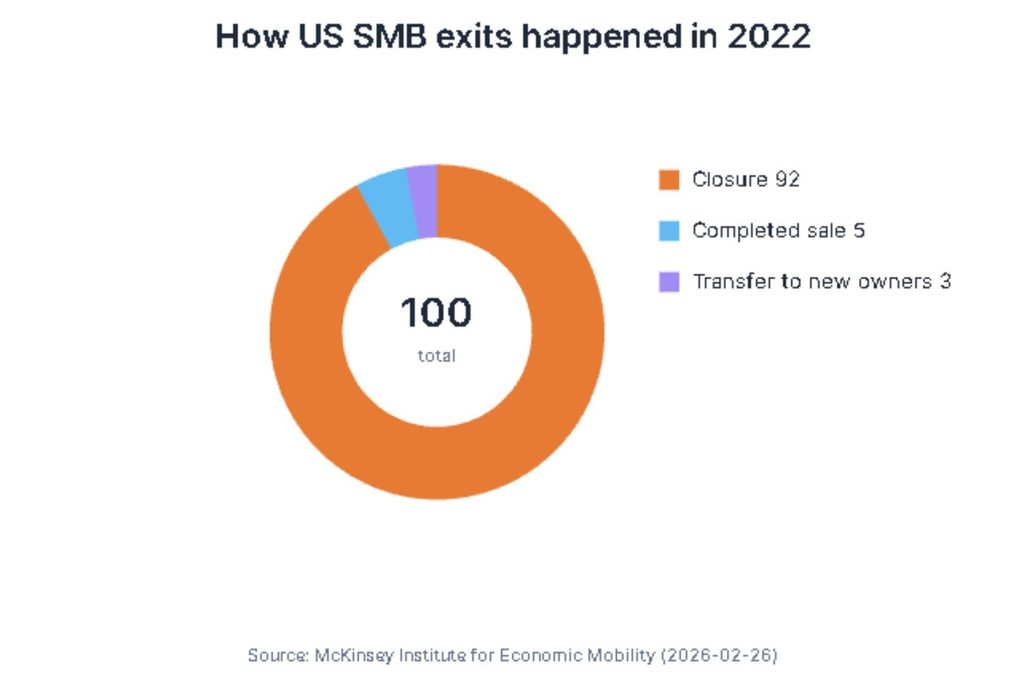
The exit is not the end of the story; it is the handoff of a business you built and the beginning of a chapter you get to design. The demographic case for planning it well is not abstract: more than half of US small-business owners are over age 55, up from roughly 30% in 2002, and one in four is 65 or older (McKinsey Institute for Economic Mobility, 2026). Most exits are not sales at all: in 2022 an estimated 510,000 small and medium-sized businesses left the market, 92% by closure, 5% as completed sales and 3% transferred to new owners. A planned sale with a designed step-down and a chosen next chapter is the minority outcome, and it is the one that protects your people and your legacy.
Life after selling a commercial cleaning business rewards the owner who treats the whole journey as stewardship: the crews you trained, the buildings you kept clean, the community that knew your name, and the person you are becoming after the phone goes quiet. The first step is not a listing agreement. It is a conversation about what the 12-to-24-month runway should look like and what you want the day after to hold.
About the guidance in this article. The observations above come from the Dream Business Brokers advisory team, which works with service-sector owners on exit planning, certified valuations and the step-down arrangements that follow a sale. Our work sits alongside the CPAs, employment counsel and tax advisors who handle the legal and financial mechanics, and we have watched enough owners walk through the Monday after to know which preparations hold up. This article is educational; it is not legal, tax or investment advice for your specific situation.
Design your step-down before you sign. A confidential Transition & Life-After-Exit Strategy Session maps your 12-to-24-month runway, your legacy goals and your first post-exit commitment, so the Monday morning after the wire is a plan rather than a silence.
Design your step-down before you sign. A confidential Transition & Life-After-Exit Strategy Session maps your 12-to-24-month runway, your legacy goals and your first post-exit commitment, so the Monday morning after the wire is a plan rather than a silence.
- 🔗 Partnering with Vinil Ramchandran: Stewardship for the Lower Middle Market Cleaning Exit
